

Swedish forest landscape

RISKFOREST

Resilient Innovation and Sustainable Knowledge for Swedish Forest Management in the Anthropocene

Discover the Project
This project is funded by Marianne and Marcus Wallenberg Foundation

About the Project

The overarching aim of RISKFOREST is to develop a framework from an integrative social-ecological perspective to bolster the resilience of Swedish forests in the face of Anthropocene risks, with the objective of developing a replicable approach and tool for enhancing the resilience of the forest managed under the Swedish Forest Management Approach (SFMA) for and together with forest owners and associations.

Sweden is the third largest exporter in the world of pulp, paper and wood products, yet it only harbours around 1% of the world's forests. This export success has been attributed to the SFMA—a globally recognized framework for sustainable forestry, combining economic productivity, environmental preservation, and social values. Key factors for its success are clear ownership of forest land (in 2022, 48% owned by private individual owners), clear rules and transparent decision-making, and public participation in policy development.

However, major concerns are now raised about the resilience of the forest managed under the SFMA—the capacity of the forest system to absorb shocks and adapt to change, thereby maintaining its functions and structure. There are already signs that the forest system is losing key functions, as decadal forest growth in Swedish forests now declines after a century of sustained increase. A key question is whether SFMA is contributing towards further resilience loss in the Anthropocene era and if so, how it could be improved to strengthen forest resilience in future.

Forest ecosystem

Aims & Goals

The RISKFOREST project aims to enhance the resilience of Sweden's forests, which are vital for maintaining the country's economy, preserving biodiversity, and reaching the Swedish climate goals.

Specific Aims

  • Take on a social perspective to understand owners' and stakeholders' relationships and interactive influence on forest resilience
  • Investigate the cascading impact of forest disruptions in Sweden
  • Explore integrative local governance options to enhance forest resilience under deep uncertainty

Project Goals

  • Develop local adaptive resilience framework
  • Strengthen forest resilience under uncertainty
  • Integrate science, policy, and management
  • Create transferable sustainable forestry model
  • Identify forest risks and vulnerabilities
  • Analyse stakeholder networks and influence
  • Assess ecological and socioeconomic impacts
  • Develop adaptive governance pathways
  • Provide local resilience planning tool

Key Innovation Areas

🌲

Social-Ecological Integration

Dynamically integrating social and biophysical process modelling for forestry

🔄

Cascading Risk Mapping

Mapping forest disruption cascades across sectors and borders

🛡️

Adaptive Governance

Co-development of local adaptive resilience plans with stakeholders

Work Packages

Team collaboration and social networks
WP1

Social Network Dynamics

Led by SRC and KTH. Examines stakeholder relationships to enhance forest management and resilience. The resulting social structures inform a coupled social-ecological model analysing interactions between stakeholders and the forest system.

  • Task 1.1: Stakeholder analysis at international, national, regional (Länsstyrelserna), and local levels
  • Task 1.2: Social network analysis of relationships (conflicting, collaborating, neutral) and network structure
  • Task 1.3: Social-ecological modelling coupling forest/vegetation model with agent-based social model

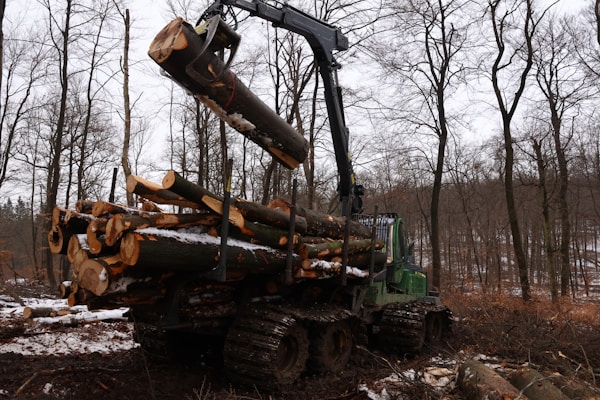
Forest disturbance
WP2

Cascading Impacts

Led by KTH with co-lead by SRC. Investigates cascading impacts of hydrometeorological disturbances and disruptions within the forest management process. Builds on WP1 outputs to examine how hydroclimatic disturbances propagate spatially across forest networks.

  • Task 2.1: Identify critical Anthropocene risks (drought, fire, heatwaves, land use change, policy disruptions)
  • Task 2.2: Network-based forest model simulating propagation of extreme events through forest systems
  • Task 2.3: Map cascading forest management disruptions and bottlenecks in decision-making
Forest adaptive management - sustainable forestry operations
WP3

Adaptive Governance Strategies

Led by SIWI. Develops DAPP for selected hotspots in Swedish forests (south to north) to investigate local-scale policy responses required to enhance resilience to compound climate extremes, cascading disruptions, and deep uncertainty.

  • Task 3.1: Co-develop DAPP towards local adaptive resilience plans, linked to network analyses (WP2)
  • Task 3.2: Develop RISKFOREST Resilience tool for forest owners and associations with citizen science
Collaboration
WP4

Coordination & Dissemination

Ensures knowledge generated benefits Swedish forestry and beyond. WP1 stakeholder dynamics allow cascading impact analyses (WP2); together they iteratively inform local-scale policy pathways (WP3). WP4 is essential for discovering existing knowledge and discussing insights with stakeholders.

  • Task 4.1: Outreach and communication via EGU, FAO COFO, IUFRO, World Water Week, UNFCCC
  • Project coordination, stakeholder workshops, RISKFOREST Resilience tool user manual

Theory & Methods

RISKFOREST applies an adapted risk assessment that integrates social-ecological and cross-scale dynamics based on ecological and social-ecological resilience theory.

Social Networks

Social networks identify relationships (conflict or collaboration) and governance structures (centralized or decentralized). Stakeholder information exchange enhances resilience by fostering adaptation, collective action, and improved governance. Stakeholder analysis determines key actors, roles, and power dynamics. Network analysis assesses resilience and functional relationships in forest system networks.

Dynamic Adaptive Policy Pathways (DAPP)

DAPP integrates adaptive policymaking and adaptation tipping points to navigate deep uncertainty. It explores sequential decisions (adaptation pathways), revealing strategy dependencies while expanding the decision space and overcoming policy paralysis. In this project, we combine DAPP with citizen science to ensure a collaborative co-development process with local stakeholders.

Project Objectives

Based on the project aims, our objectives are:

I

Investigate the interplay of stakeholders and social-ecological systems in shaping forest outcomes (WP1)

II

Analyse cascading disruptions from forest disturbances across ecological and socio-economic networks (WP2)

III

Develop local adaptive resilience plans through the Dynamic Adaptive Policy Pathways (DAPP) approach in combination with citizen science (WP3)

IV

Coordination of stakeholder engagement and collaboration, knowledge discovery and dissemination (WP4)

Expected Outcomes & Benefits

The outcomes of this project can contribute to enhancing the resilience of forests under SFMA by shaping local adaptation policies and implementing more targeted resilience plans.

Key stakeholders benefiting from these results include Swedish forest owners and managers, Sweden's Forest Owners Associations and LRF Skogsägarna, the Swedish Forest Industries Federation, FSC Sverige, and the Swedish Forest Agency. Sweden has a forest tenure form where about half of the productive forest land is owned by smallholders ("family forestry"). Most smallholders are engaged in one of four forest owners' associations—together nearly 112,000 members, of whom 38% are women.

Through the development of Dynamic Adaptive Policy Pathways and the RISKFOREST Resilience tool in close collaboration with key stakeholders, the project aims to go beyond diagnostics, actively contributing to the co-creation of solutions by developing local adaptive resilience plans that outline viable pathways for strengthening the resilience of Swedish forests managed under SFMA against Anthropocene risks.

Contribution to Sustainable Development Goals

RISKFOREST contributes to SDG 13 (Climate Action), SDG 15 (Life on Land), SDG 12 (Responsible Consumption and Production), and SDG 6 (Water and Sanitation) by strengthening policies at the forest-water nexus.

Forest path
"An interdisciplinary, social-ecological approach is urgently required to address the lack of identification of critical Anthropocene risks to Swedish forest resilience."

Knowledge Gaps Addressed

The resilience of Swedish forests is threatened by both regional biophysical extreme events (storms, droughts, wildfires, pests, disease) and disruptions from maladaptive management decisions. RISKFOREST addresses three major gaps:

Gap 1: Social-Ecological Integration

Ecological and social issues are still typically studied in separation. Novel modelling approaches are needed to study how the forest as a social-ecological system dynamically co-evolves with its stakeholders—a new area of research yet to be applied to the forestry system.

Gap 2: Cascading Impacts

Most studies have focused on isolated forest disturbances, overlooking how disruptions in one patch propagate to others or trigger further disruptions, both ecologically and within hierarchical management structures. These cascading impacts have not been considered together in previous research.

Gap 3: Adaptive Governance

Governance systems often lack flexibility to handle deep uncertainties. IPBES has called for a new forest governance paradigm. The Dynamic Adaptive Policy Pathways (DAPP) approach has yet to be rigorously tested for the Swedish forest context.

Partners & Contact

RISKFOREST brings together expertise from Stockholm Resilience Centre (SRC), KTH Royal Institute of Technology, and SIWI (Stockholm International Water Institute). SRC leads consortium management; SIWI and SRC coordinate knowledge co-production through interactive workshops.

Key Stakeholders

  • Swedish Forest Agency (Skogsstyrelsen)
  • Swedish EPA
  • Federation of Swedish Farmers (LRF) / Swedish Forest Owner Association
  • Swedish Forest Industries Association (Skogsindustrierna)
  • Svea Skog / SCA
  • Skogforsk
  • WWF
  • FSC Sverige
  • Naturskyddsföreningen
  • Sami / reindeer communities